


 ไทย
ไทย
In today’s digital age, readers and learners access information through various devices — from computers and tablets to smartphones. Therefore, creating ‘Responsive E-books’ has become a crucial element in modern educational media design. A responsive E-book ensures that readers can enjoy a seamless reading experience across all platforms, regardless of screen size or operating system.
Developing Interactive E-books
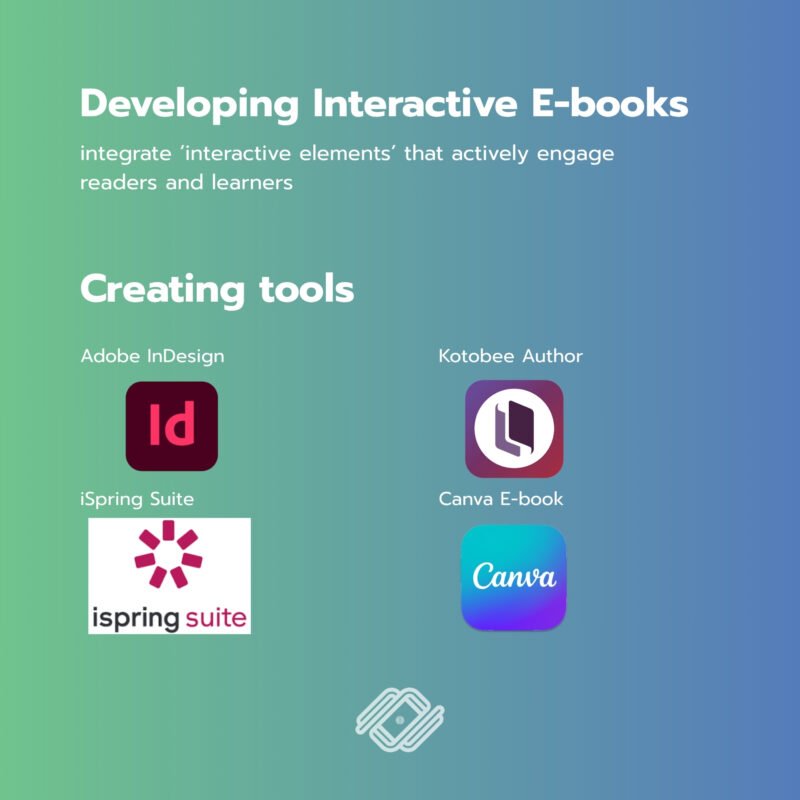
Modern E-books go beyond plain text and static images — they now integrate ‘interactive elements’ that actively engage readers and learners. Examples include:
- Clicking to answer quizzes or multiple-choice questions
- Watching embedded videos or listening to audio explanations
- Exploring 3D images or using ‘Augmented Reality (AR)’ to enhance comprehension
Creating an interactive E-book can be achieved through various authoring tools such as Adobe InDesign, Kotobee Author, Canva E-book, or iSpring Suite, which allow designers to integrate text, images, audio, video, and hyperlinks seamlessly.
Moreover, responsive design plays a key role — ensuring text automatically adjusts in size, columns rearrange according to screen orientation, and HTML5 technology supports cross-platform functionality on iOS, Android, and Windows devices.
Integrating the TPACK Model in E-book Design
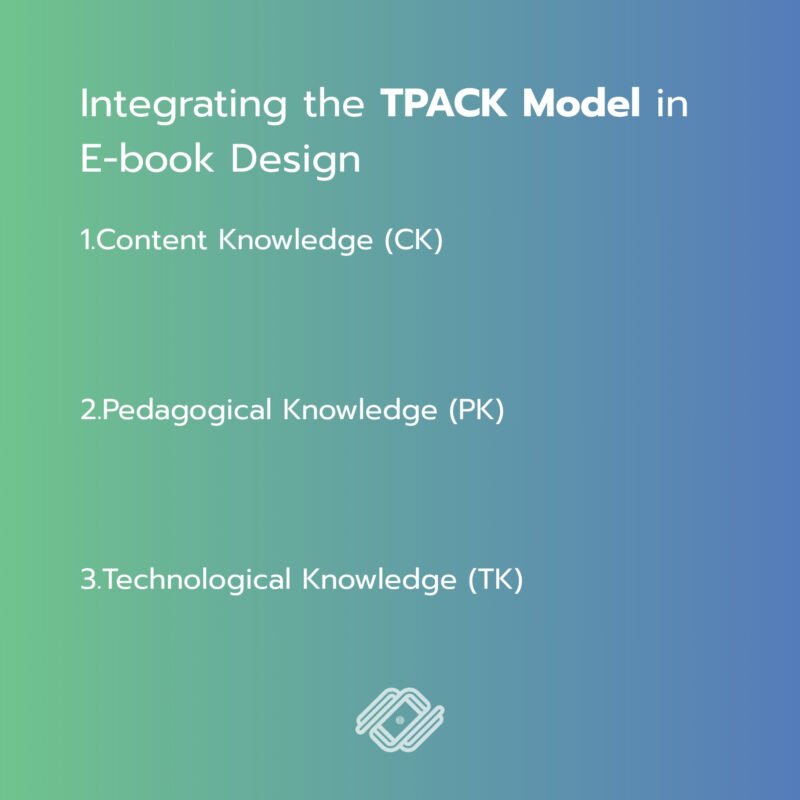
Creating an effective E-book involves not only technical skills but also educational theory. One useful framework is the TPACK Model (Technological Pedagogical Content Knowledge), which integrates three essential domains:
- Content Knowledge (CK) — Understanding of the subject matter being taught.
- Pedagogical Knowledge (PK) — Knowledge of teaching methods, learning activities, and assessment strategies.
- Technological Knowledge (TK) — Understanding of tools and digital technologies used to create learning media.
By combining these three knowledge areas, designers can create E-books that are not only visually appealing and functional but also pedagogically effective. For example:
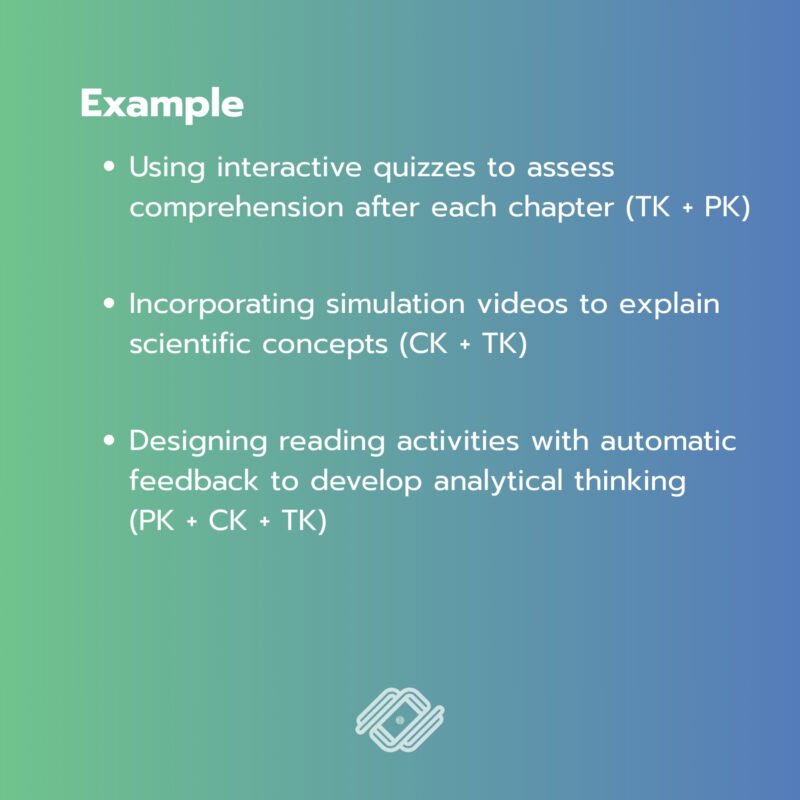
- Using interactive quizzes to assess comprehension after each chapter (TK + PK)
- Incorporating simulation videos to explain scientific concepts (CK + TK)
- Designing reading activities with automatic feedback to develop analytical thinking (PK + CK + TK)
Applying the TPACK model ensures that technology serves as a tool for learning enhancement, rather than just a decorative addition to reading materials. It guides the E-book design process toward meaningful educational outcomes.
Conclusion
In conclusion, developing ‘Responsive E-books’ requires a balance between technology and pedagogical design. By incorporating interactive features and aligning with the TPACK framework, educators and designers can create engaging, effective, and learner-centered digital books that truly enhance the educational experience.
Source: starfishlabz.com
If you want your business to reach online customers and achieve sustainable marketing results, we are happy to provide consultation on what you need.
For further inquiries, contact us at: Tel. 093 696 4498
Line OA: https://lin.ee/po8XduU E-mail: mongkontep@pkindev.com
Inverz Solutions Co., Ltd. has received numerous awards for its achievements