


 ไทย
ไทย
For many organizations—especially those managing a large number of equipment, tools, or company assets— asset tracking often becomes a constant headache. Questions like Who is using this asset? Where is it located? What condition is it in? Is it due for maintenance? come up repeatedly. When businesses still rely on Excel spreadsheets or manual records, these challenges only become more complicated.
An Asset Management System is designed to eliminate these pain points by centralizing data, improving visibility, and reducing human error. Here are five common problems it can effectively solve.
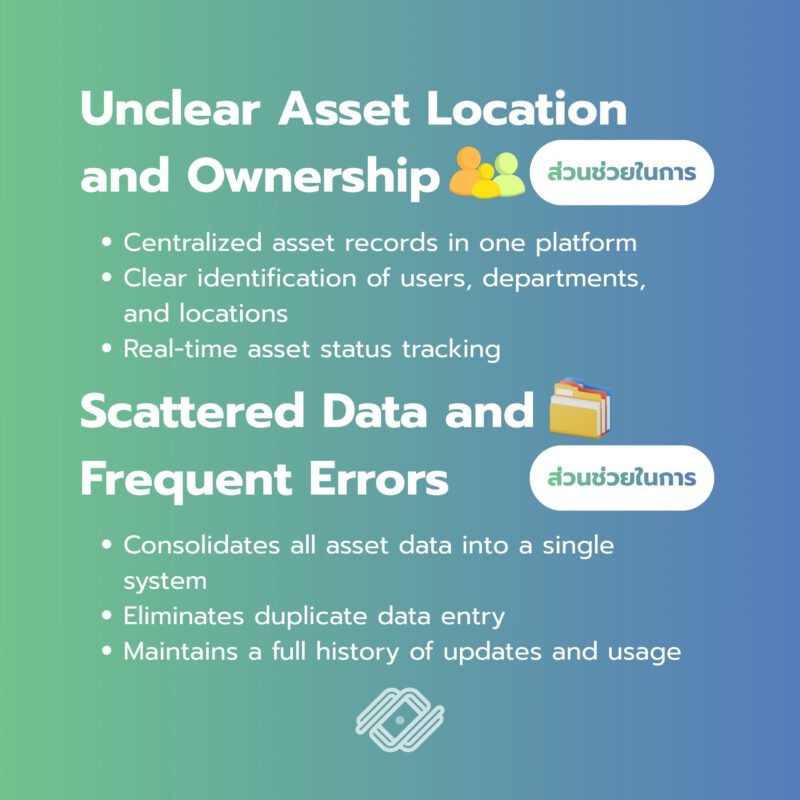
- Unclear Asset Location and Ownership
One of the most common issues is not knowing where assets are or who is responsible for them. Assets may physically exist but are “missing” in records, leading to confusion and disputes.
How an Asset System Helps
- Centralized asset records in one platform
- Clear identification of users, departments, and locations
- Real-time asset status tracking
This improves accountability and transparency across the organization.
- Scattered Data and Frequent Errors
Using multiple Excel files across different departments often results in inconsistent, outdated, or inaccurate data. Manual updates increase the risk of human error.
How an Asset System Helps
- Consolidates all asset data into a single system
- Eliminates duplicate data entry
- Maintains a full history of updates and usage
Ensuring data accuracy, reliability, and easy access at all times.
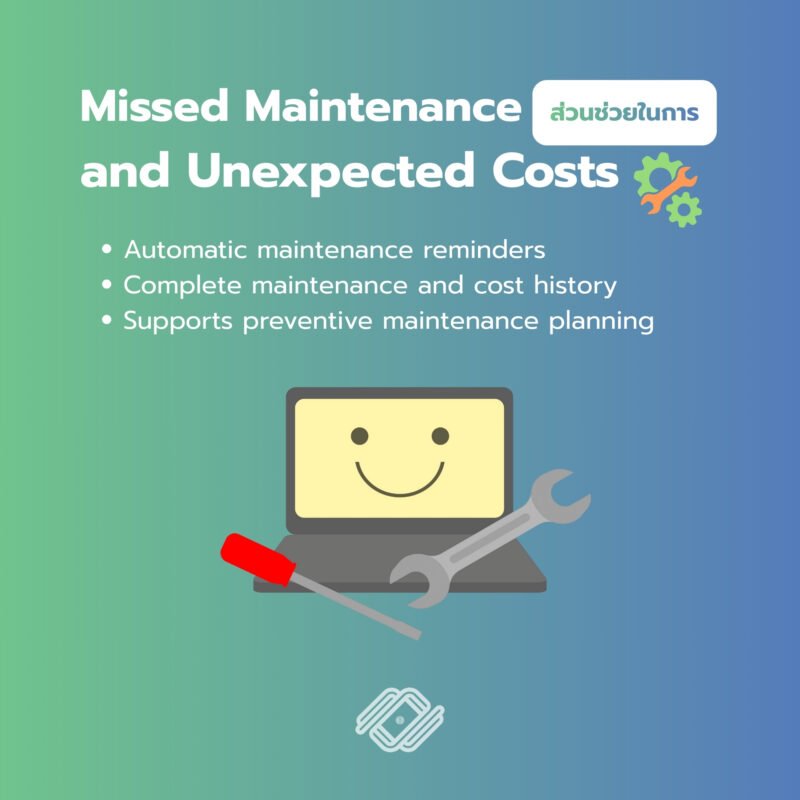
- Missed Maintenance and Unexpected Costs
Without proper maintenance tracking, assets can deteriorate quickly or fail unexpectedly—leading to higher repair costs and operational disruptions.
How an Asset System Helps
- Automatic maintenance reminders
- Complete maintenance and cost history
- Supports preventive maintenance planning
This extends asset lifespan and helps control long-term expenses.
- Time-Consuming Asset Audits
Annual or periodic asset audits can be labor-intensive and time-consuming, especially for organizations with multiple locations.
How an Asset System Helps
- Supports Barcode or QR Code scanning
- Faster and more accurate asset verification
- Reduces paperwork and manual processes
Making asset audits faster, easier, and more efficient.
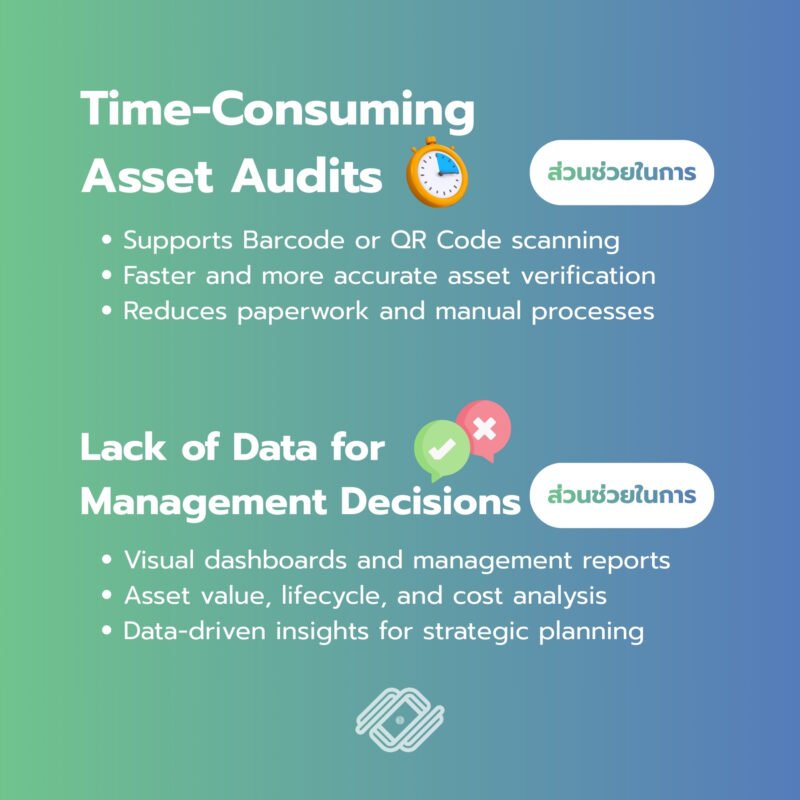
- Lack of Data for Management Decisions
Without a clear overview of asset performance and value, management struggles to make informed decisions about purchasing, replacement, or disposal.
How an Asset System Helps
- Visual dashboards and management reports
- Asset value, lifecycle, and cost analysis
- Data-driven insights for strategic planning
Enabling smarter decisions and sustainable business growth.
Conclusion
If your organization struggles with asset tracking, inconsistent data, missed maintenance, or poor cost control, an Asset Management System can transform complexity into clarity. It streamlines operations, increases efficiency, and turns asset management into a powerful strategic advantage rather than a daily burden.
If you want your business to reach online customers and achieve sustainable marketing results, we are happy to provide consultation on what you need.
For further inquiries, contact us at: Tel. 093 696 4498 Line OA: https://lin.ee/po8XduU E-mail: mongkontep@pkindev.com
Inverz Solutions Co., Ltd. has received numerous awards for its achievements