


 ไทย
ไทย
In today’s data-driven and fast-paced business environment, E-Tax Invoice (Electronic Tax Invoice) has become a critical tool for improving operational efficiency. It not only streamlines document management but also reduces costs and enables seamless data integration—especially when combined with ERP systems, which unify and automate business processes across the organization.
What is an E-Tax Invoice and What Are Its Types?
An ‘E-Tax Invoice’ is a tax invoice created and managed in an electronic format instead of paper. It is authenticated according to the standards set by the Revenue Department and can be stored, transmitted, and verified digitally.
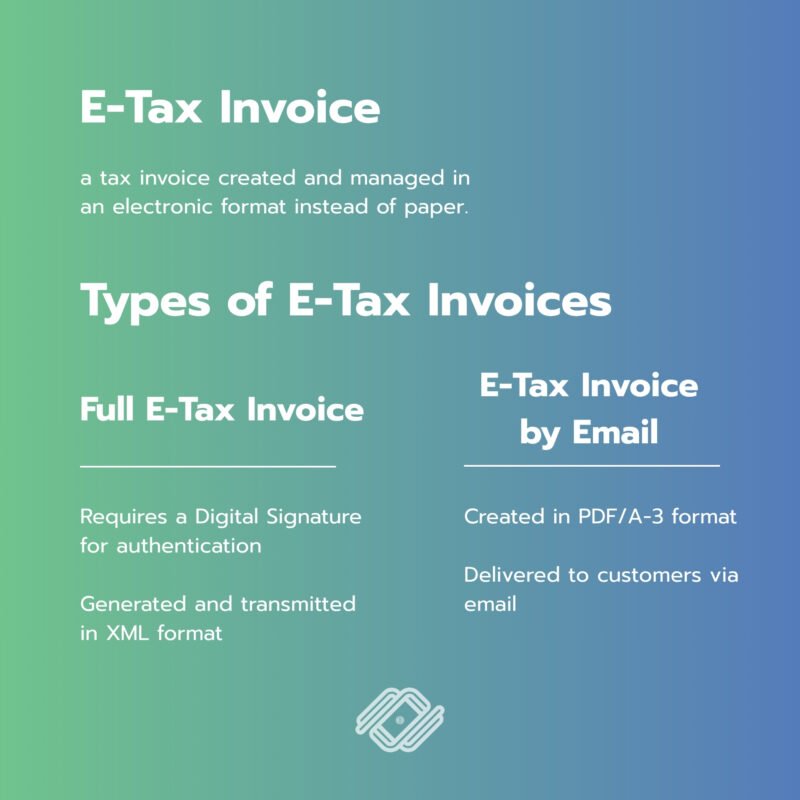
E-Tax Invoices are generally divided into two main types:
- Full E-Tax Invoice & e-Receipt System
- Generated and transmitted in XML format
- Requires a Digital Signature for authentication
- Suitable for medium to large enterprises
- E-Tax Invoice by Email
- Created in PDF/A-3 format
- Delivered to customers via email
- Ideal for SMEs starting their digital transition
Benefits of Implementing E-Tax Invoice in Business
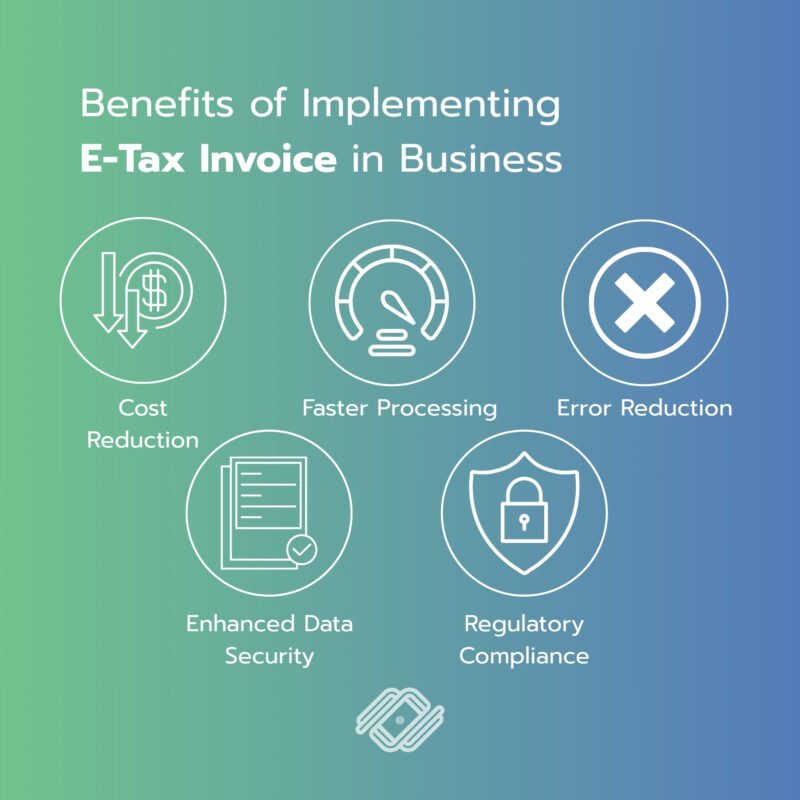
Switching from traditional paper-based invoicing to E-Tax Invoice offers more than just paper reduction—it significantly enhances overall business performance:
- Cost Reduction: Saves on printing, storage, and logistics expenses
- Faster Processing: Instantly generate and deliver invoices to customers
- Error Reduction: Minimizes manual data entry and human errors
- Enhanced Data Security: Ensures encrypted and traceable records
- Regulatory Compliance: Simplifies tax audits and compliance with government regulations
Why Integrate E-Tax Invoice with ERP Systems?
Integrating E-Tax Invoice with an ERP (Enterprise Resource Planning) system elevates organizational efficiency by enabling seamless data flow and automation.
Key Benefits of Integration
- Centralized Data Management: Customer, sales, and tax data are unified in one system
- Automation: Automatically generate tax invoices from sales transactions
- Workflow Optimization: Eliminates redundant data entry across multiple systems
- Improved Accuracy: Reduces errors from manual input
- Real-Time Reporting: Easily access tax reports and historical records
How to Implement E-Tax Invoice in ERP
- Assess ERP Readiness:
Ensure your ERP system supports E-Tax Invoice integration
- Select a Certified Provider:
Choose a provider approved by the Revenue Department
- Develop or Integrate via API:
Connect ERP with the E-Tax Invoice system through APIs
- System Testing:
Test invoice generation and data transmission processes
- Go Live:
Launch full-scale implementation within the organization
Which Businesses Should Implement E-Tax Invoice in ERP?
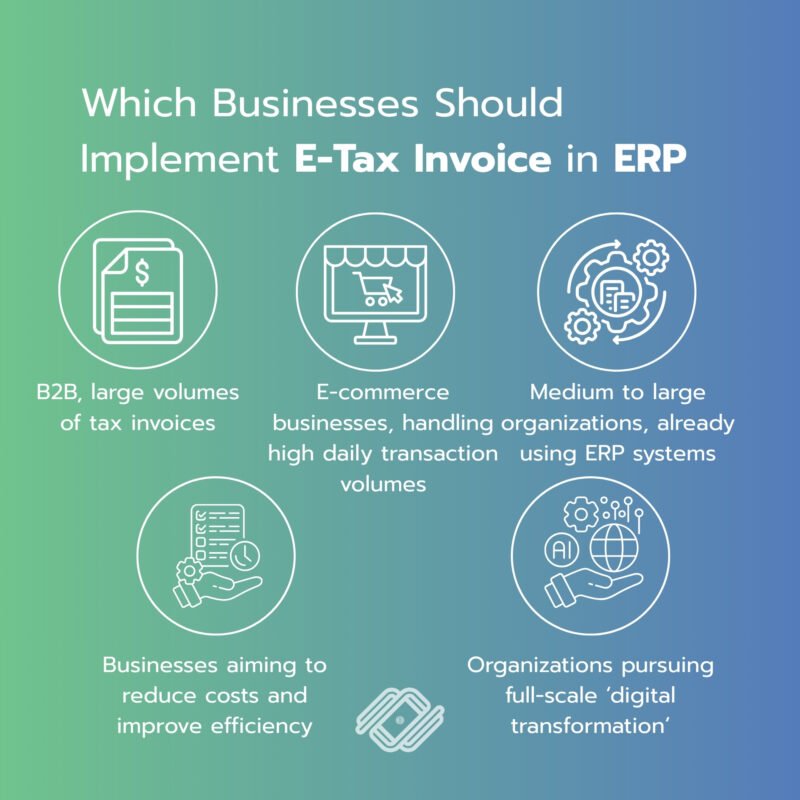
This solution is especially beneficial for businesses with high document volumes or complex operations, such as:
- B2B enterprises issuing, large volumes of tax invoices
- E-commerce businesses, handling high daily transaction volumes
- Medium to large organizations, already using ERP systems
- Businesses aiming to reduce costs and improve efficiency
- Organizations pursuing full-scale ‘digital transformation’
Conclusion: Elevate Your Business with E-Tax Invoice + ERP
E-Tax Invoice is no longer just an option—it is a strategic necessity for modern businesses seeking speed, accuracy, and digital compliance. When integrated with ERP systems, it transforms fragmented workflows into a cohesive, automated ecosystem, ultimately enhancing productivity and competitiveness.
Source: quick-transformation.com
If your organization is looking for a comprehensive E-Tax Invoice solution with seamless ERP integration, we are a technology expert ready to provide tailored consultation and implementation services to meet your business needs.
For further inquiries, contact us at: Tel. 093 696 4498 Line OA: https://lin.ee/po8XduU E-mail: mongkontep@pkindev.com
Inverz Solutions Co., Ltd. has received numerous awards for its achievements