


 ไทย
ไทย
What Are VR and AR?
Virtual Reality (VR) and Augmented Reality (AR) are immersive technologies that have become increasingly popular in the digital era, especially in web and application development. Both aim to create interactive experiences that allow users to engage with digital content in a more realistic and dynamic way.
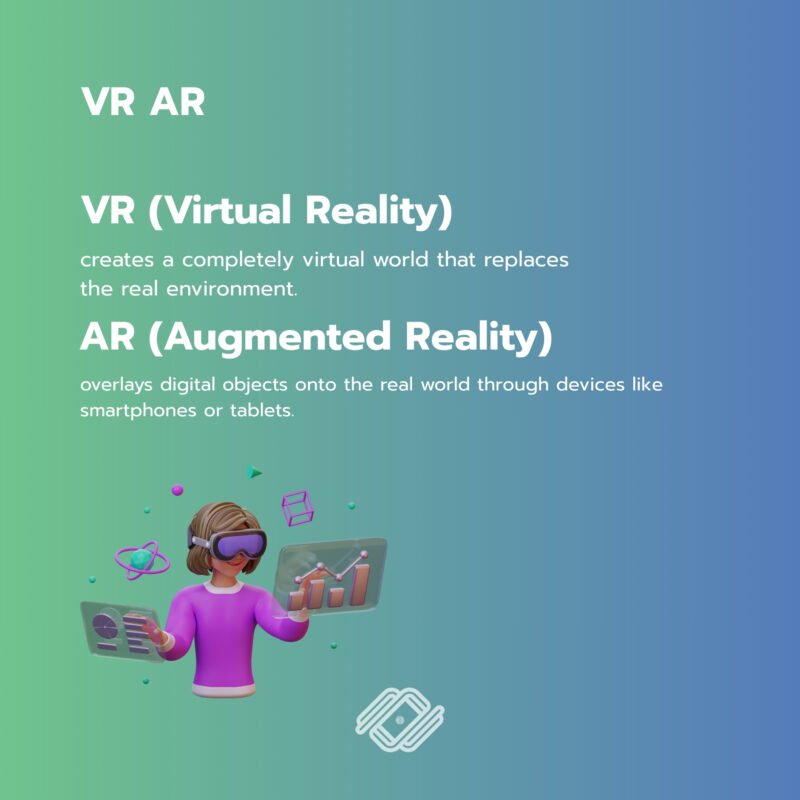
VR (Virtual Reality) creates a completely virtual world that replaces the real environment. Users wear VR headsets to explore simulated surroundings—such as virtual house tours, training environments, or 3D walkthroughs.
AR (Augmented Reality) overlays digital objects onto the real world through devices like smartphones or tablets. This allows users to see virtual elements (such as 3D models, text, or images) blended seamlessly with their real environment—for example, placing virtual furniture in a room or trying on a product through a mobile camera.
Definition
Both VR and AR belong to the category of immersive technology, which focuses on providing users with a sense of presence and interaction beyond traditional viewing or reading. These technologies are now being applied across multiple industries, including education, tourism, real estate, e-commerce, and entertainment.
The Difference Between VR and AR
Aspect | Virtual Reality (VR) | Augmented Reality (AR) |
Usage | Creates a fully virtual environment | Adds virtual elements to the real world |
Required Devices | VR headset, controller | Smartphone, tablet, AR glasses |
Interaction | Users move within a simulated environment | Users view digital elements within the real world |
Examples | VR gaming, virtual training | Product try-on, navigation, interactive marketing |
Benefits of VR and AR for Customers
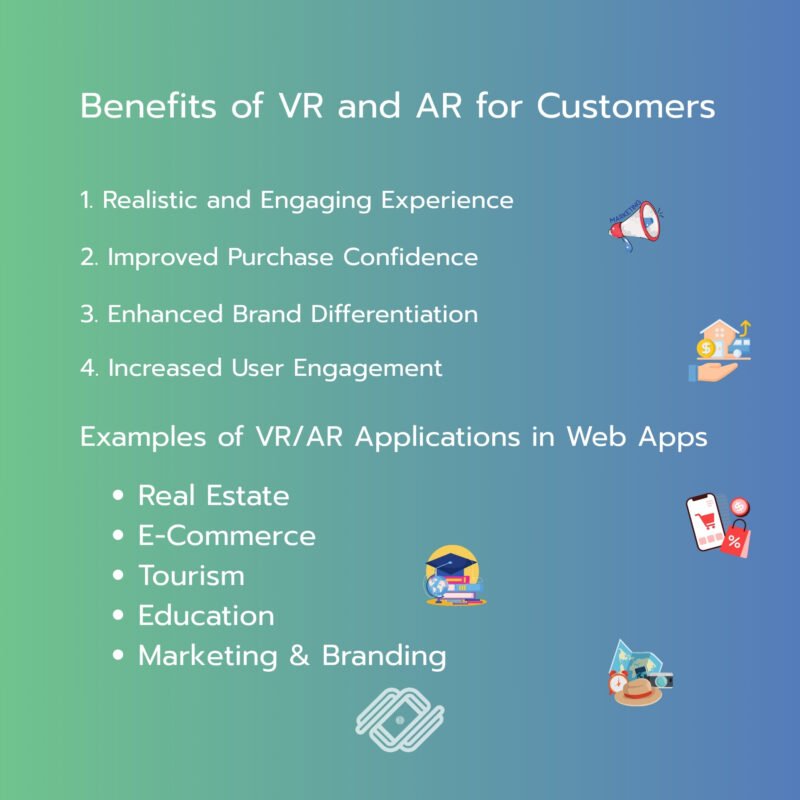
- Realistic and Engaging Experience
– Customers can explore products, services, or locations in a lifelike way—such as virtually trying on clothes via AR or viewing a VR-based property tour—without being physically present.
- Improved Purchase Confidence
– Seeing and interacting with 3D models or realistic simulations helps customers better understand products and make more confident purchase decisions.
- Enhanced Brand Differentiation
– Websites or apps that incorporate VR/AR appear more modern and innovative, strengthening brand identity and memorability.
- Increased User Engagement
– Interactive experiences encourage users to spend more time on websites or apps, boosting user engagement and retention.
Examples of VR/AR Applications in Web Apps
- Real Estate: Virtual property tours using VR allow customers to explore houses in 360° without visiting in person.
- E-Commerce: Fashion websites use AR to let customers virtually try on clothing or accessories via mobile cameras.
- Tourism: Travel websites offer Virtual Tours that take visitors around famous destinations using VR technology.
- Education: Web-based learning apps use AR to visualize complex topics—such as atomic structures or the solar system—in interactive 3D form.
- Marketing & Branding: Websites launch AR-based campaigns or games that engage users, such as scanning a QR code to reveal 3D visuals.
Conclusion
Integrating Virtual Reality (VR) and Augmented Reality (AR) into Web Applications is an effective way to elevate user experience, enhance interactivity, and build a more innovative digital presence. These technologies not only make websites more engaging but also add value to businesses aiming to stand out in today’s fast-evolving digital landscape.
Source: sable.asia
If you want your business to reach online customers and achieve sustainable marketing results, we are happy to provide consultation on what you need.
For further inquiries, contact us at:
Tel. 093 696 4498 Line OA: https://lin.ee/po8XduU
E-mail: mongkontep@pkindev.com
Inverz Solutions Co., Ltd. has received numerous awards for its achievements