


 ไทย
ไทย
UX/UI design today has evolved far beyond aesthetics and usability. As digital products shift toward personalization, immersive interaction, and AI-assisted creativity, the future of design is becoming more expressive, dynamic, and distinct. In 2025–2026, designers are embracing a bold new direction where uniqueness becomes a core identity. Here are the key trends shaping this creative evolution.
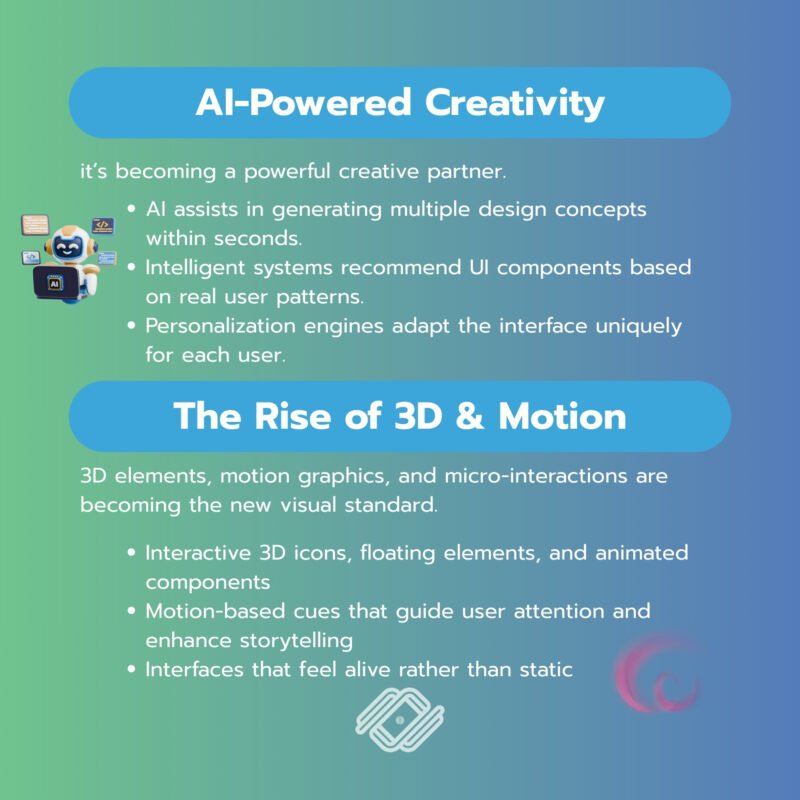
- AI-Powered Creativity
AI is no longer just a tool for automation — it’s becoming a powerful creative partner.
- AI assists in generating multiple design concepts within seconds.
- Intelligent systems recommend UI components based on real user patterns.
- Personalization engines adapt the interface uniquely for each user.
The result is a new wave of design that blends human creativity with AI-driven insight, leading to interfaces that feel fresh, responsive, and deeply personal.
- The Rise of 3D & Motion
3D elements, motion graphics, and micro-interactions are becoming the new visual standard.
- Interactive 3D icons, floating elements, and animated components
- Motion-based cues that guide user attention and enhance storytelling
- Interfaces that feel alive rather than static
This trend helps brands stand out by creating expressive, memorable experiences that captivate users on both functional and emotional levels.
- Immersive Experiences (AR/VR)
Immersive design has moved far beyond gaming and virtual worlds. AR and VR are transforming everyday digital platforms.
- AR try-ons for products in e-commerce
- VR spaces for training, workshops, exhibitions, and digital navigation
- Multi-sensory interactions involving movement, sound, and spatial depth
These experiences elevate UX/UI from simple interaction to true engagement — allowing users to “experience” rather than “observe.”
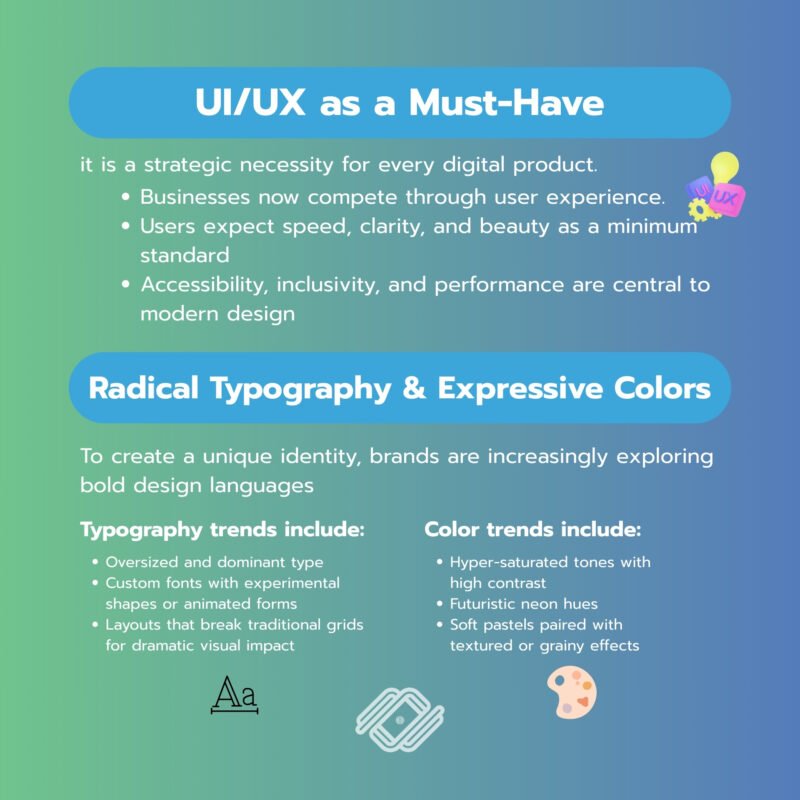
- UI/UX as a Must-Have
UX/UI is no longer optional; it is a strategic necessity for every digital product.
- Businesses now compete through user experience, not just pricing
- Users expect speed, clarity, and beauty as a minimum standard
- Accessibility, inclusivity, and performance are central to modern design
The shift toward “UX-first products” highlights how critical design has become in shaping trust, retention, and overall satisfaction.
- Radical Typography & Expressive Colors
To create a unique identity, brands are increasingly exploring bold design languages through typography and color.
Typography trends include:
- Oversized and dominant type
- Custom fonts with experimental shapes or animated forms
- Layouts that break traditional grids for dramatic visual impact
Color trends include:
- Hyper-saturated tones with high contrast
- Futuristic neon hues
- Soft pastels paired with textured or grainy effects
These expressive elements turn interfaces into visual art, setting brands apart and strengthening emotional connection.
Conclusion
The future of UX/UI is vibrant, boundary-pushing, and deeply human-centered. With AI-driven creativity, 3D motions, immersive technologies, and bold artistic expression, designers are crafting digital experiences that feel memorable, meaningful, and unmistakably unique. In this new era, UX/UI is not just design — it’s a fusion of creativity, technology, and emotion that leaves a lasting impression.
Source: spu.ac.th
If you want your business to reach online customers and achieve sustainable marketing results, we are happy to provide consultation on what you need.
For further inquiries, contact us at: Tel. 093 696 4498 Line OA: https://lin.ee/po8XduU E-mail: mongkontep@pkindev.com
Inverz Solutions Co., Ltd. has received numerous awards for its achievements