


 ไทย
ไทย
Have you ever wondered how mobile applications are created? Behind these everyday technologies lies the world of Computer Engineering, waiting to be explored.
From a simple idea to a functional application, website, or intelligent system, everything is built through a structured development process. Project-based learning plays a crucial role in helping beginner computer engineers develop real-world skills and confidently step into the technology job market.
What Does a Computer Engineer Do?
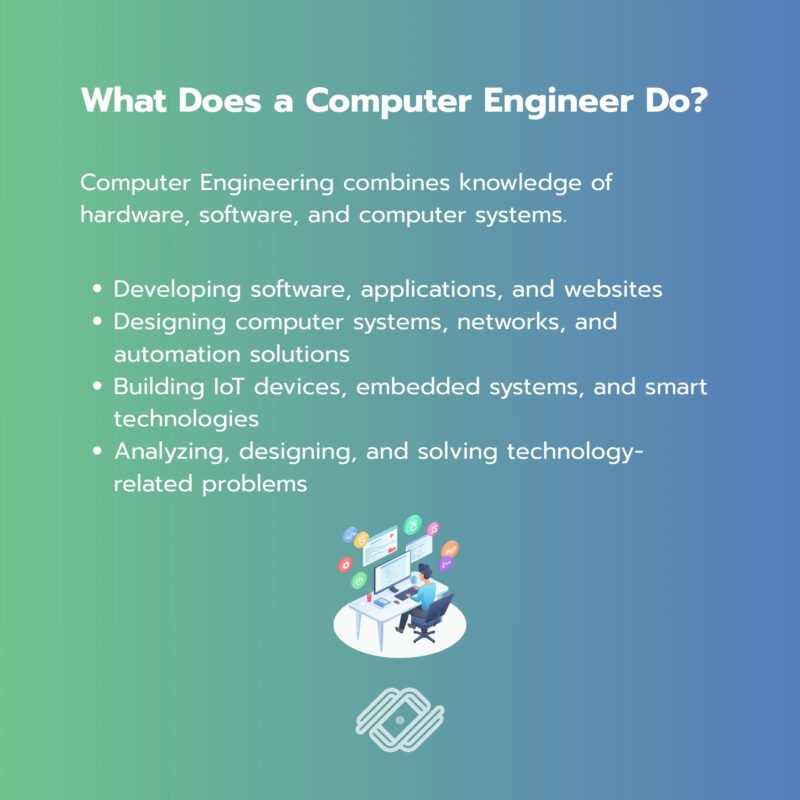
Computer Engineering combines knowledge of hardware, software, and computer systems. In general, computer engineers are involved in:
- Developing software, applications, and websites
- Designing computer systems, networks, and automation solutions
- Building IoT devices, embedded systems, and smart technologies
- Analyzing, designing, and solving technology-related problems
For beginners, starting with project-based development is one of the most effective ways to gain hands-on experience and build a strong portfolio that showcases real abilities to employers.
Simple Project-Based Development Steps for Beginner Computer Engineers
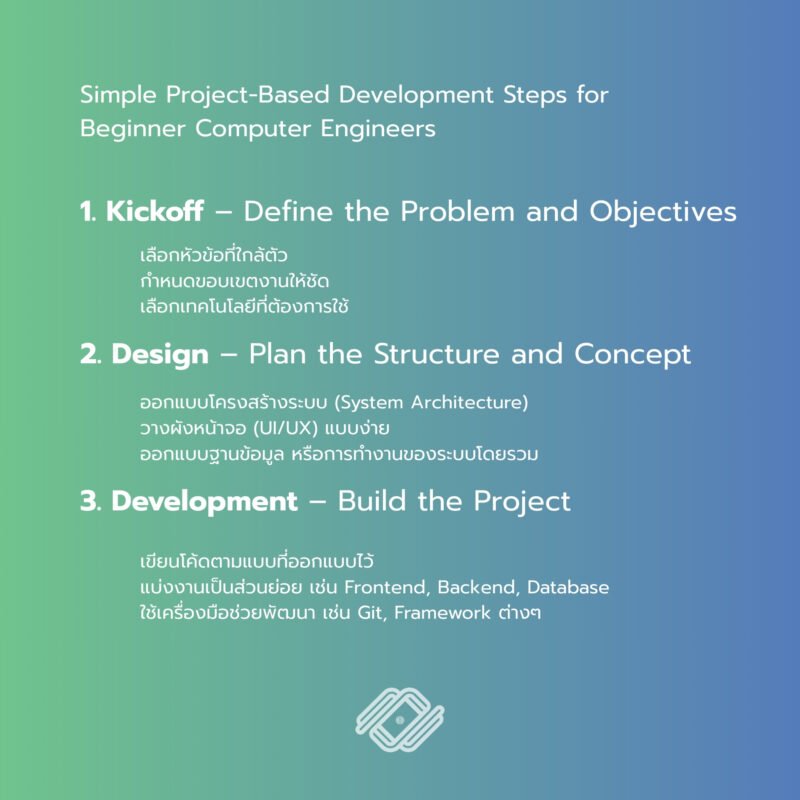
- Kickoff – Define the Problem and Objectives
The first step of any project is asking the right questions: What are we building, and what problem does it solve?
- Choose a simple, relatable project idea such as a budgeting app, queue booking system, or small business website
- Clearly define the project scope to match a beginner’s skill level
- Select the technologies to be used (Web, Mobile App, IoT, etc.)
A well-planned kickoff phase keeps the project focused and achievable.
- Design – Plan the Structure and Concept
Once the idea is clear, the next step is system design.
- Design the system architecture
- Create simple UI/UX wireframes
- Plan databases and overall system workflows
Good design helps visualize the entire project before coding begins and reduces future rework.
- Development – Build the Project
This is the core phase of the project.
- Write code based on the design plan
- Break the project into smaller components such as frontend, backend, and database
- Use development tools like Git and relevant frameworks
For beginners, perfection is not required—focus on building a functional and working system.
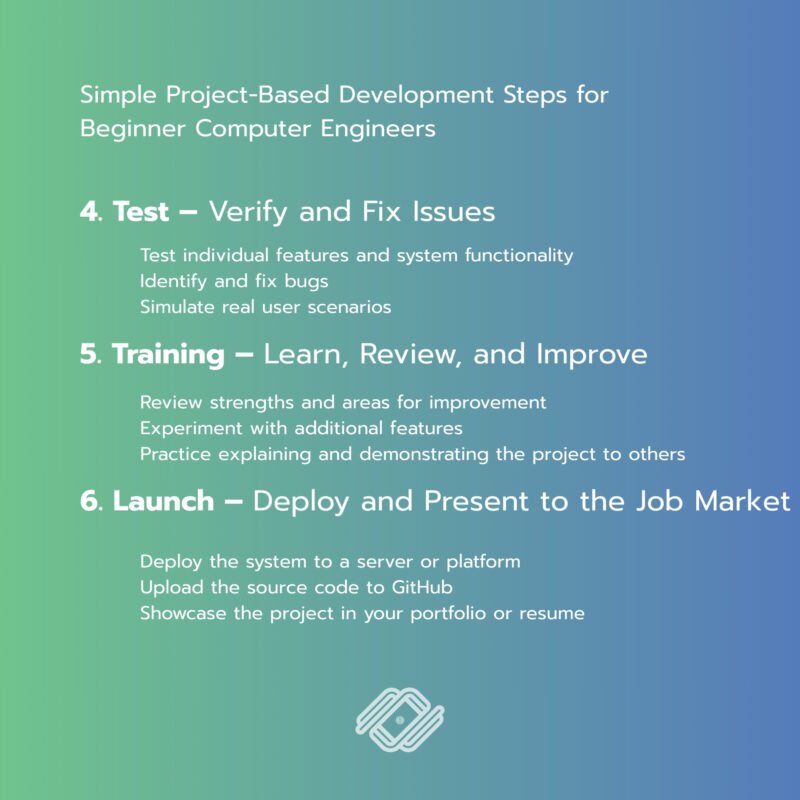
- Testing – Verify and Fix Issues
After development, thorough testing is essential.
- Test individual features and system functionality
- Identify and fix bugs
- Simulate real user scenarios
Testing improves project quality and strengthens problem-solving skills.
- Training – Learn, Review, and Improve
Once the system is stable, take time to reflect and improve.
- Review strengths and areas for improvement
- Experiment with additional features
- Practice explaining and demonstrating the project to others
This phase enhances both technical understanding and communication skills.
- Launch – Deploy and Present to the Job Market
The final step is making the project public and accessible.
- Deploy the system to a server or platform
- Upload the source code to GitHub
- Showcase the project in your portfolio or resume
A launched project serves as solid proof of practical skills and readiness for the technology job market.
Conclusion
Project-based development is more than just coding—it is a complete learning journey from ideation and design to development and real-world deployment.
For beginner computer engineers, even a small project can become a powerful stepping stone toward a successful career in technology, opening doors to new opportunities with confidence
Source: spu.ac.th
If you want your business to reach online customers and achieve sustainable marketing results, we are happy to provide consultation on what you need.
For further inquiries, contact us at: Tel. 093 696 4498 Line OA: https://lin.ee/po8XduU E-mail: mongkontep@pkindev.com
Inverz Solutions Co., Ltd. has received numerous awards for its achievements