


 ไทย
ไทย
In today’s digital era, technology plays a vital role in transforming business operations across all industries. The real estate sector is no exception—especially the real estate brokerage business, which involves complex workflows ranging from property sourcing and client management to documentation and financial transactions. As a result, the use of applications and software solutions has become an essential tool for improving efficiency, minimizing errors, and streamlining overall operations.
The Meaning of Full-Service Real Estate Brokerage
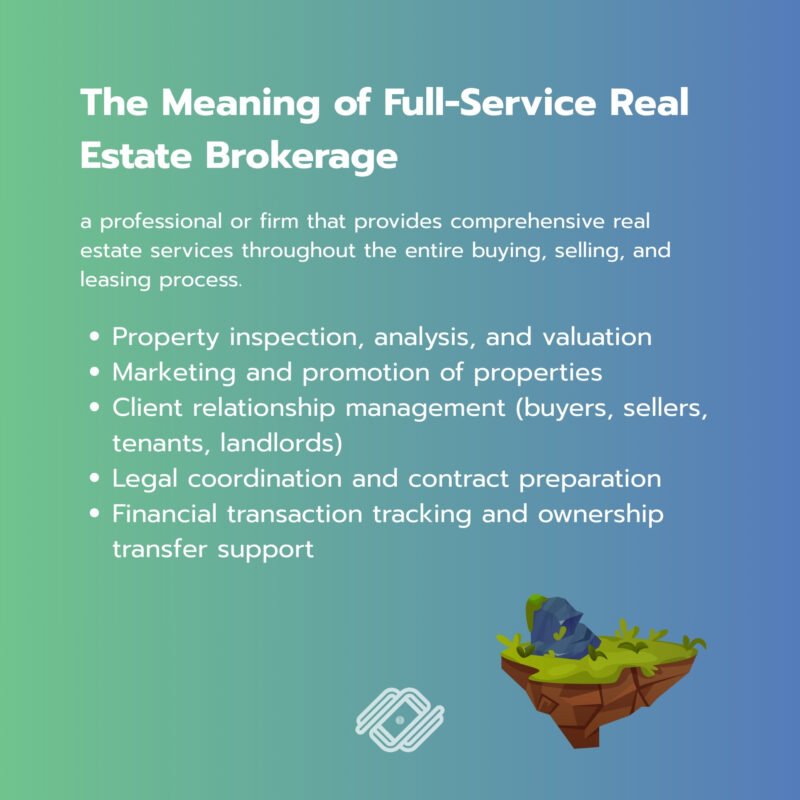
A Full-Service Real Estate Agent refers to a professional or firm that provides comprehensive real estate services throughout the entire buying, selling, and leasing process. Beyond matching buyers with sellers, full-service brokers typically handle:
- Property inspection, analysis, and valuation
- Marketing and promotion of properties
- Client relationship management (buyers, sellers, tenants, landlords)
- Legal coordination and contract preparation
- Financial transaction tracking and ownership transfer support
Given the wide scope of responsibilities, real estate brokers require an efficient management system—making digital applications an ideal solution.
Using Software to Manage Real Estate Brokerage Operations
Real estate brokerage applications are designed to support end-to-end operations and can be categorized into four key functional areas:
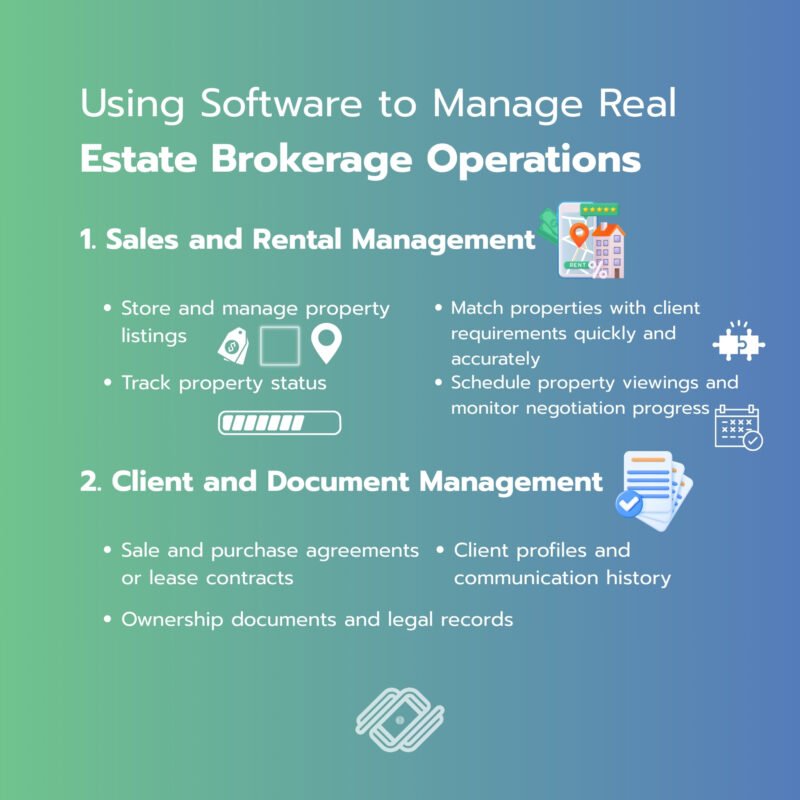
- Sales and Rental Management
Applications for sales and rental operations allow brokers to:
- Store and manage property listings, including pricing, location, images, and specifications
- Track property status (available, under negotiation, closed)
- Match properties with client requirements quickly and accurately
- Schedule property viewings and monitor negotiation progress
These features help reduce repetitive tasks and significantly increase deal-closing efficiency.
- Client and Document Management
Digital platforms centralize important documentation, such as:
- Sale and purchase agreements or lease contracts
- Ownership documents and legal records
- Client profiles and communication history
Storing documents digitally minimizes the risk of loss and allows for instant access anytime, anywhere.
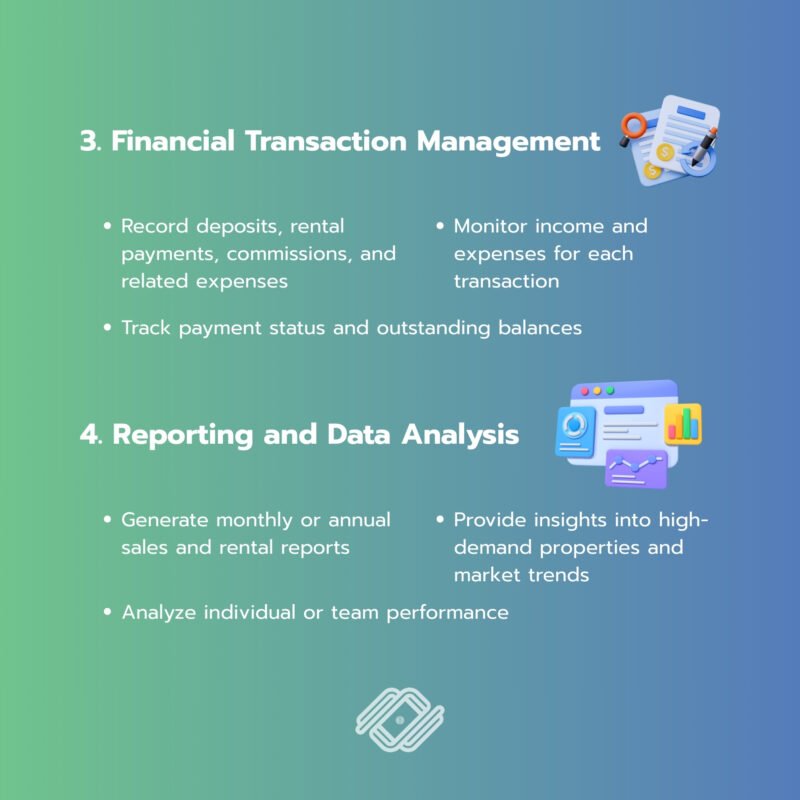
- Financial Transaction Management
From a financial perspective, real estate applications help brokers:
- Record deposits, rental payments, commissions, and related expenses
- Track payment status and outstanding balances
- Monitor income and expenses for each transaction
This ensures financial transparency and provides a clear overview of business performance.
- Reporting and Data Analysis
One of the strongest advantages of real estate management software is its reporting capability. These systems can:
- Generate monthly or annual sales and rental reports
- Analyze individual or team performance
- Provide insights into high-demand properties and market trends
Such data-driven insights enable brokers and managers to develop more accurate business strategies.
Conclusion
Using applications to manage real estate brokerage operations is more than just adopting technology—it is a strategic move toward professionalism, efficiency, and sustainable growth. In an increasingly competitive and fast-changing market, a well-structured management system has become an indispensable tool for modern real estate brokers aiming to stay ahead.
Source: iqibcp.com, ddproperty.com
If you want your business to reach online customers and achieve sustainable marketing results, we are happy to provide consultation on what you need.
For further inquiries, contact us at: Tel. 093 696 4498 Line OA: https://lin.ee/po8XduU E-mail: mongkontep@pkindev.com
Inverz Solutions Co., Ltd. has received numerous awards for its achievements