


 ไทย
ไทย
In today’s digital era, data has become one of the most valuable assets for any business. Whether it’s customer information, financial records, order history, or internal documents, losing control of this data can severely impact revenue, credibility, and long-term growth.
That’s why data security is no longer just an IT concern — it’s something every business owner should understand and prioritize.
The Importance of Business Data
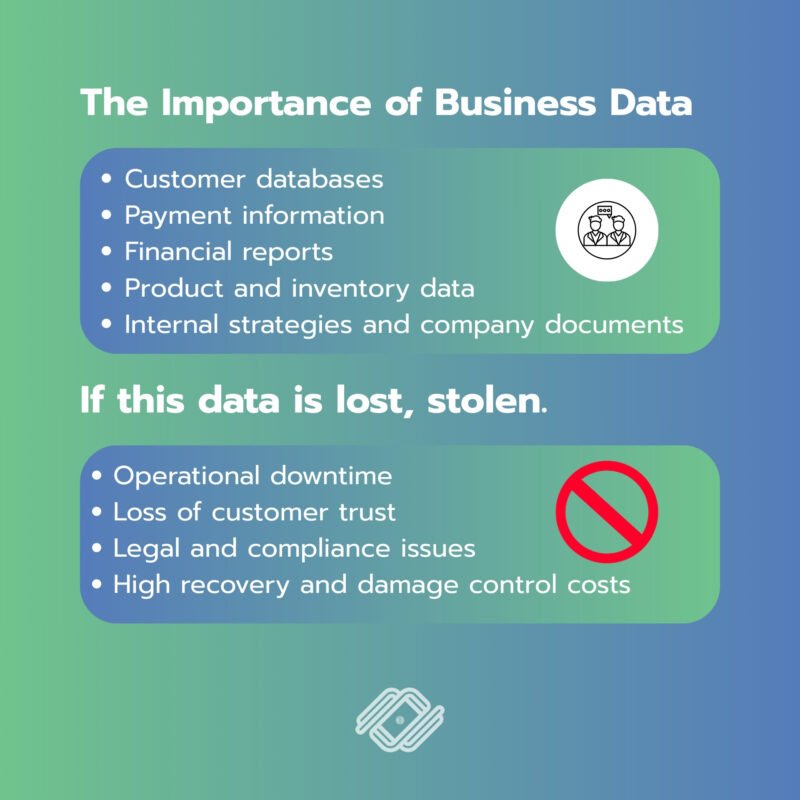
Business data is the backbone of daily operations. It includes:
- Customer databases
- Payment information
- Financial reports
- Product and inventory data
- Internal strategies and company documents
If this data is lost, stolen, or compromised, the consequences can include:
- Operational downtime
- Loss of customer trust
- Legal and compliance issues
- High recovery and damage control costs
On the other hand, having strong data protection measures in place allows businesses to operate confidently, securely, and sustainably.
Essential Data Security Methods You Should Implement Today
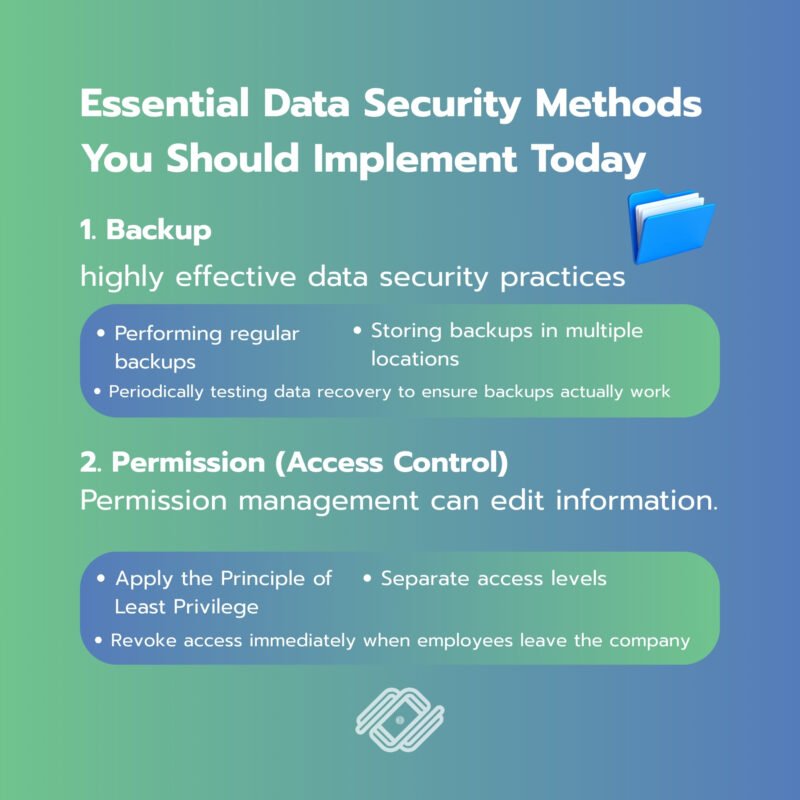
Here are four fundamental yet highly effective data security practices every business should adopt:
- Backup
Backup means creating copies of your data and storing them in a separate location.
This protects your business in case of accidental deletion, system failure, cyberattacks, or ransomware.
Best practices include:
- Performing regular backups (daily or weekly)
- Storing backups in multiple locations (e.g., cloud and external drives)
- Periodically testing data recovery to ensure backups actually work
Without proper backups, a business may face catastrophic data loss that could take months — or even years — to recover from.
- Permission (Access Control)
Not everyone in your organization should have access to all data. Permission management controls who can view, edit, or delete specific information.
Key principles:
- Apply the Principle of Least Privilege (grant only necessary access)
- Separate access levels (Admin, Manager, Staff)
- Revoke access immediately when employees leave the company
Limiting access reduces both internal errors and the risk of unauthorized data exposure.
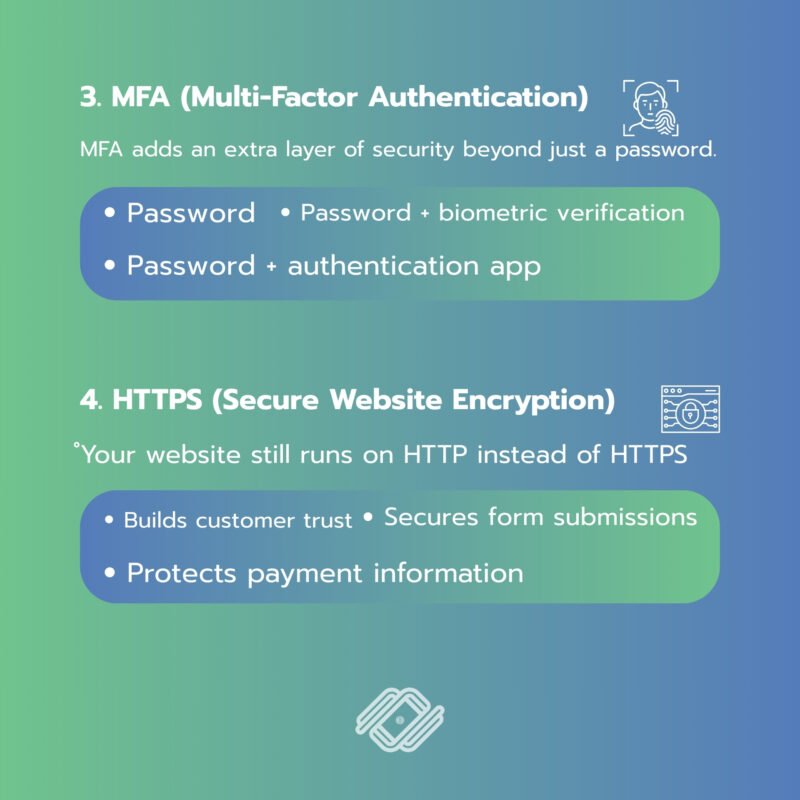
- MFA (Multi-Factor Authentication)
MFA adds an extra layer of security beyond just a password.
Examples include:
- Password + SMS OTP
- Password + authentication app
- Password + biometric verification
Even if a password is leaked, attackers cannot access the system without the second verification step.
Businesses should enable MFA for:
- Company email accounts
- Website admin panels
- Accounting systems
- Cloud storage platforms
MFA is one of the most cost-effective ways to dramatically improve security.
- HTTPS (Secure Website Encryption)
If your website still runs on HTTP instead of HTTPS, data transmitted between users and your server may be vulnerable to interception.
HTTPS encrypts data in transit, which:
- Protects payment information
- Secures form submissions
- Builds customer trust
- Improves SEO rankings (Google prioritizes secure websites)
Installing an SSL certificate to enable HTTPS is now a basic security standard for all business websites.
Conclusion: Security Is Not an Expense — It’s an investment.
Many businesses view data security as an unnecessary cost — until something goes wrong. In reality, implementing basic protections like Backup, Permission management, MFA, and HTTPS can prevent damages worth thousands — or even millions — in the future.
Data security doesn’t have to be complicated. By starting with these fundamental practices, your business can build a strong digital foundation and grow with confidence in an increasingly connected world.
Source: perceptra.tech
If you want your business to reach online customers and achieve sustainable marketing results, we are happy to provide consultation on what you need.
For further inquiries, contact us at: Tel. 093 696 4498 Line OA: https://lin.ee/po8XduU E-mail: mongkontep@pkindev.com
Inverz Solutions Co., Ltd. has received numerous awards for its achievements