


 ไทย
ไทย
In today’s highly competitive business environment, speed, accuracy, and data-driven decision-making are critical factors for success. While Excel has long been a familiar and useful tool for many businesses, relying solely on spreadsheets may no longer be sufficient as organizations grow and operations become more complex.
This is why many entrepreneurs are turning to ‘ready-made application systems, particularly ERP solutions’, to manage their businesses more efficiently and sustainably.
What Is ERP (Enterprise Resource Planning)?
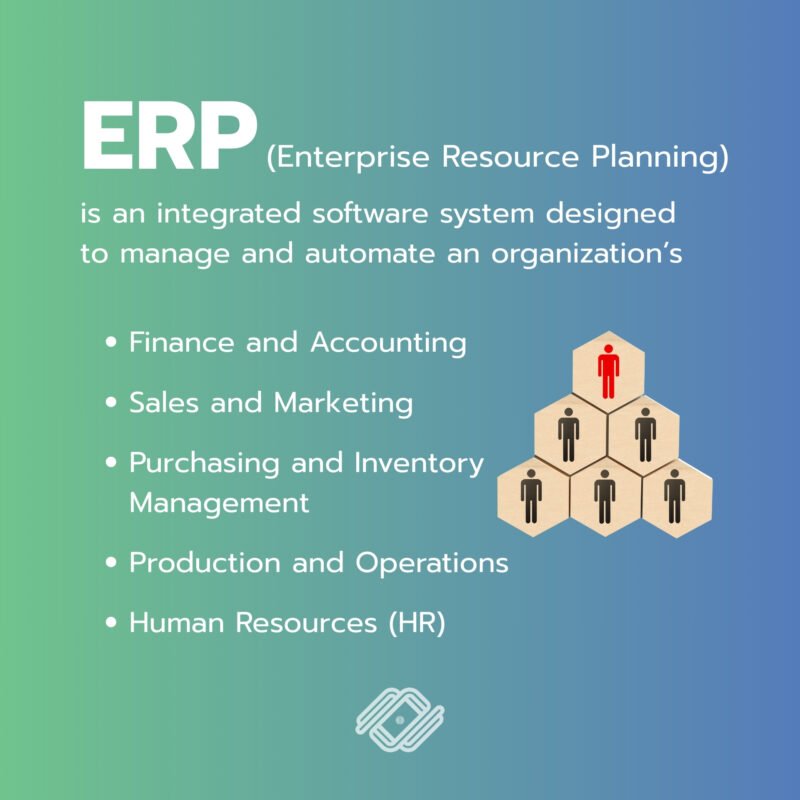
ERP (Enterprise Resource Planning) is an integrated software system designed to manage and automate an organization’s core business processes within a single platform. ERP systems centralize data and workflows across multiple departments, such as:
- Finance and Accounting
- Sales and Marketing
- Purchasing and Inventory Management
- Production and Operations
- Human Resources (HR)
By using a shared database, ERP ensures that all departments work with the same accurate and up-to-date information, enabling better coordination and transparency across the organization.
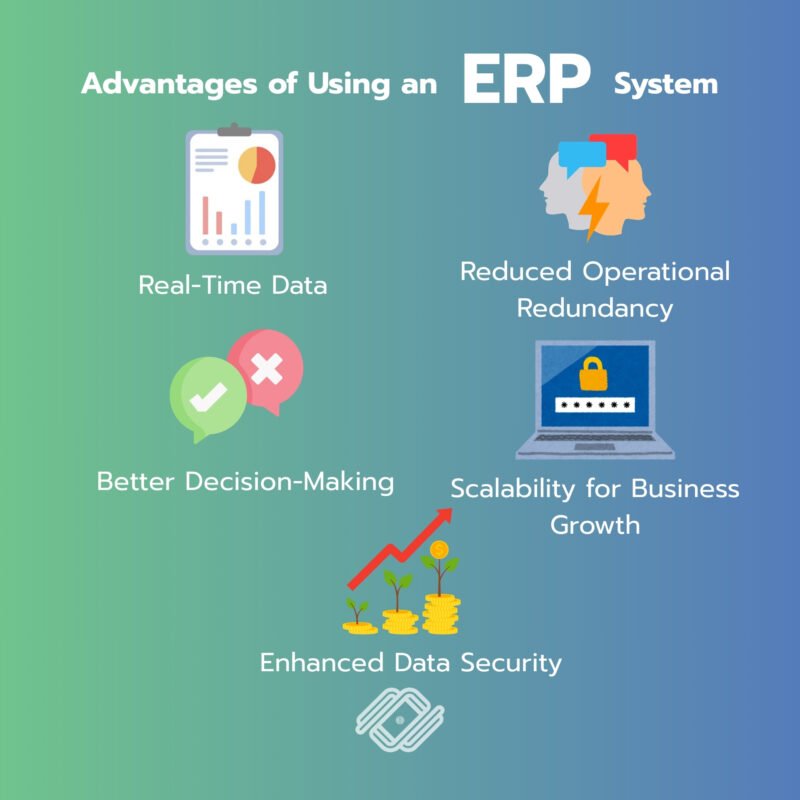
Advantages of Using an ERP System
- Accurate and Real-Time Data
ERP systems provide real-time data updates, significantly reducing errors caused by duplicate data entry or multiple spreadsheet versions.
- Reduced Operational Redundancy
With integrated workflows, data entered by one department can be automatically shared with others, eliminating repetitive tasks and improving productivity.
- Better Decision-Making
ERP systems offer dashboards and automated reports that give management a clear overview of business performance, enabling faster and more informed strategic decisions.
- Scalability for Business Growth
As a business expands—whether through new branches, increased staff, or higher transaction volumes—ERP systems can scale and adapt to meet growing operational demands.
- Enhanced Data Security
ERP platforms allow administrators to assign user access rights based on roles and responsibilities, ensuring sensitive business data is well protected.
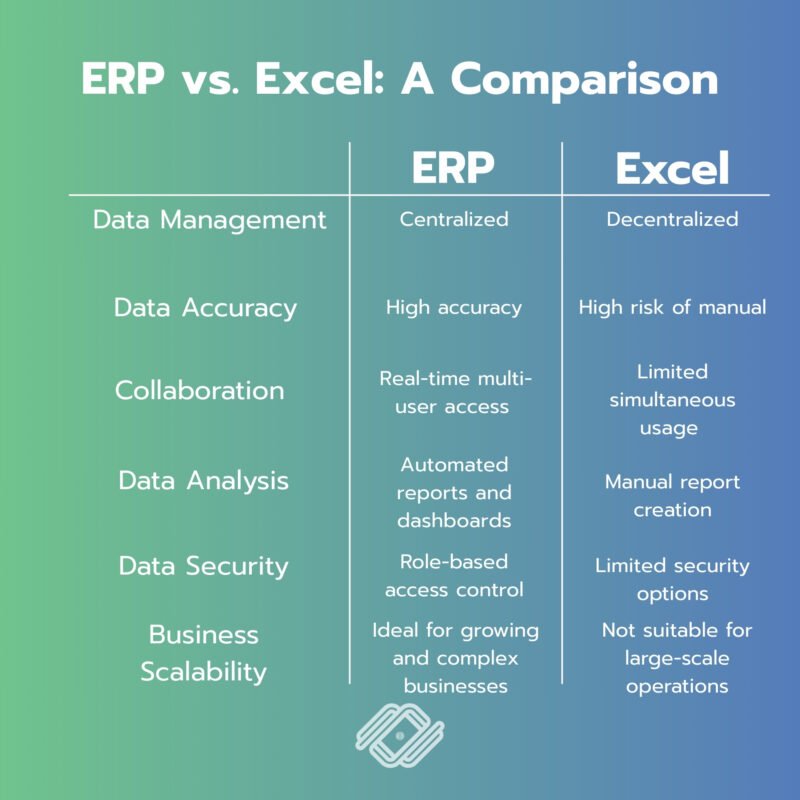
Conclusion
Excel remains a valuable tool for basic tasks and early-stage businesses. However, as organizations grow and require more structured, accurate, and scalable management systems, investing in an ERP or ready-made application solution becomes a strategic necessity. An ERP system not only reduces operational inefficiencies but also empowers entrepreneurs to focus on strategic planning, innovation, and long-term business growth—rather than manual data management.
Source: cybernetics.plus
If you want your business to reach online customers and achieve sustainable marketing results, we are happy to provide consultation on what you need.
For further inquiries, contact us at: Tel. 093 696 4498 Line OA: https://lin.ee/po8XduU E-mail: mongkontep@pkindev.com
Inverz Solutions Co., Ltd. has received numerous awards for its achievements