


 ไทย
ไทย
In today’s highly competitive digital landscape, a website has become a critical tool for B2B (Business-to-Business) companies to build credibility, communicate value, and drive conversions. However, many organizations still face an important question: should they choose a ‘Responsive Website’ or a ‘Static Website’?
This article explores both approaches, compares their key differences, and helps you determine which option best aligns with your B2B business goals.
What Is a Responsive Website and a Static Website?
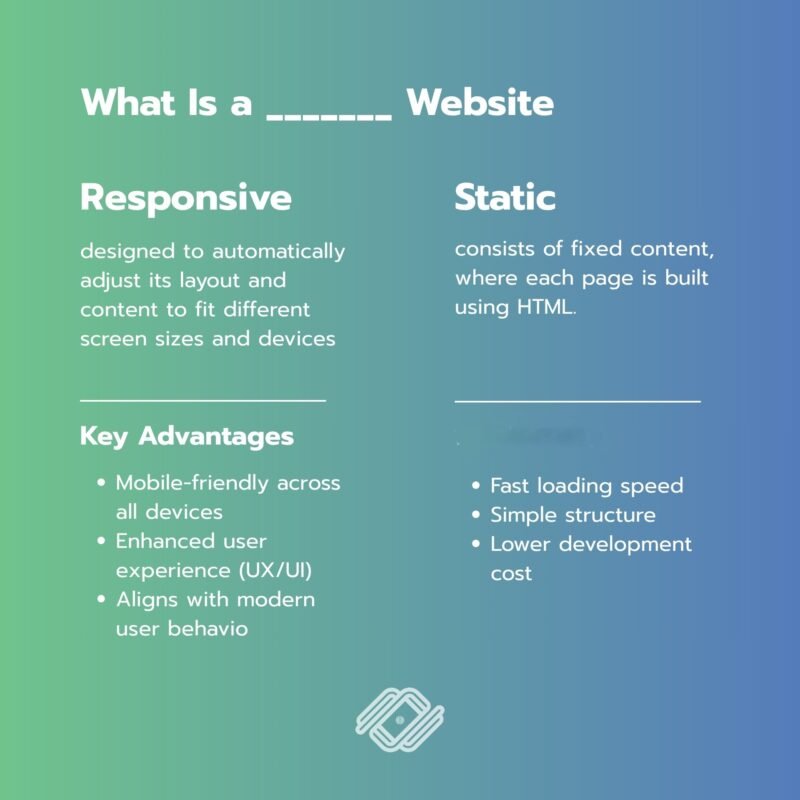
- Responsive Website
A Responsive Website is designed to automatically adjust its layout and content to fit different screen sizes and devices, including desktops, tablets, and smartphones. It uses flexible grids, layouts, and CSS techniques to ensure optimal user experience across all platforms.
Key Advantages:
- Mobile-friendly across all devices
- Enhanced user experience (UX/UI)
- Aligns with modern user behavior
- Static Website
A Static Website consists of fixed content, where each page is built using HTML and does not dynamically change based on user interaction or database input. Content updates typically require manual code edits.
Key Advantages:
- Fast loading speed
- Simple structure
- Lower development cost
Which One Is Better for B2B Businesses?
The Answer: Responsive Website
For most B2B companies, a Responsive Website is the more suitable and future-ready choice.
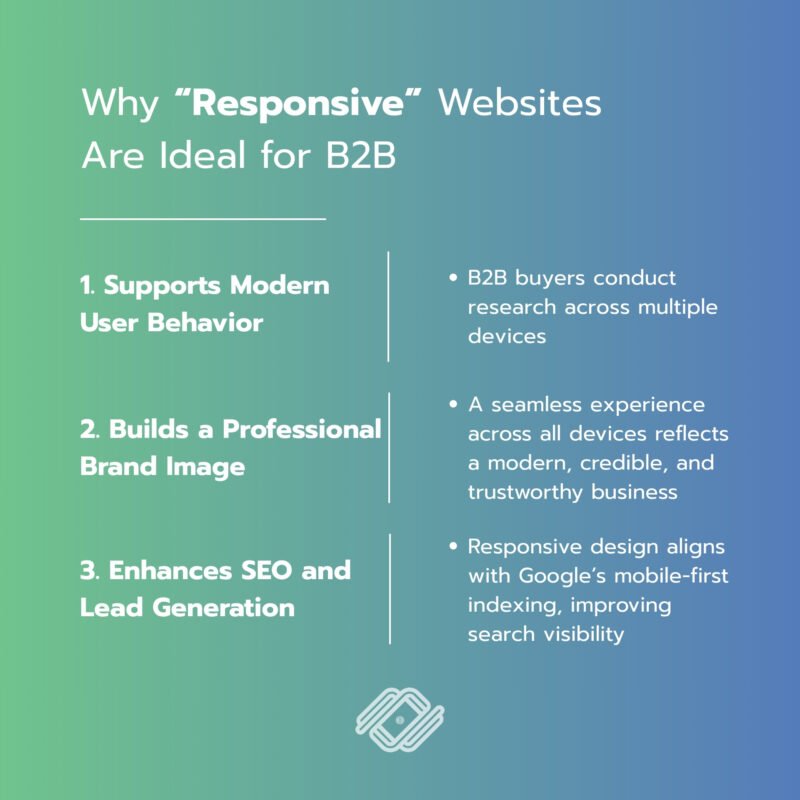
Why Responsive Websites Are Ideal for B2B
- Supports Modern User Behavior:
Today’s B2B buyers conduct research across multiple devices—not just desktops. A non-mobile-friendly website can lead to missed opportunities and higher bounce rates.
- Builds a Professional Brand Image:
A seamless experience across all devices reflects a modern, credible, and trustworthy business—an essential factor in B2B decision-making.
- Enhances SEO and Lead Generation:
Responsive design aligns with Google’s mobile-first indexing, improving search visibility and increasing the chances of attracting qualified leads.
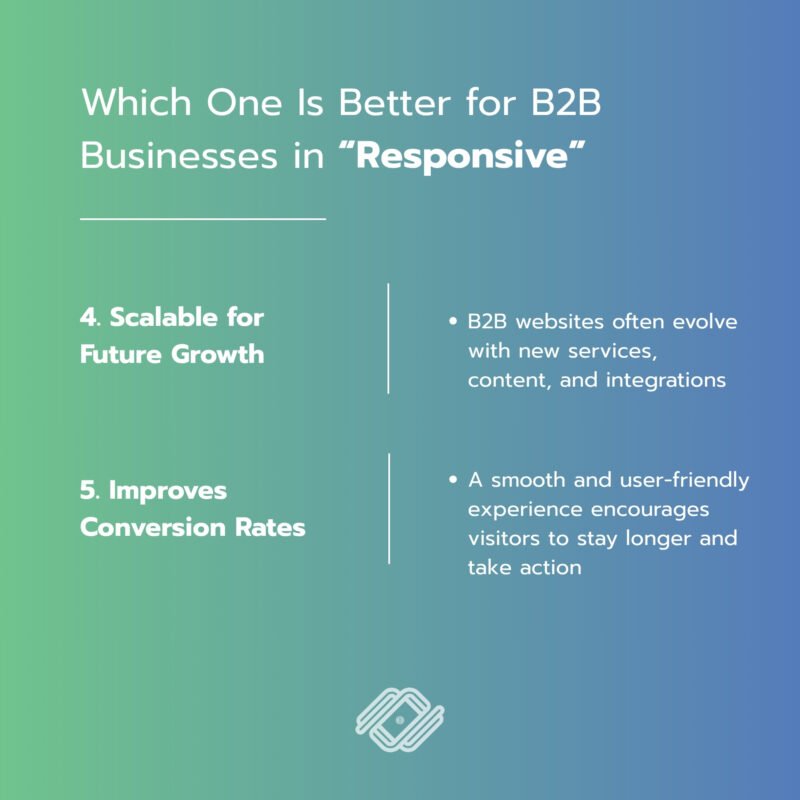
- Scalable for Future Growth:
B2B websites often evolve with new services, content, and integrations (e.g., CRM systems, lead forms, analytics tools). Responsive websites offer greater flexibility for expansion.
- Improves Conversion Rates:
A smooth and user-friendly experience encourages visitors to stay longer and take action—whether that’s filling out a contact form, requesting a quote, or making an inquiry.
Conclusion
While Static Websites offer advantages in speed and cost-efficiency, they may fall short in meeting the demands of modern B2B marketing and customer expectations. Responsive Websites are the smarter investment for B2B businesses—offering better user experience, stronger SEO performance, and greater scalability for long-term growth.
If you’re planning to build or upgrade your B2B website, choosing a Responsive approach is not just about design—it’s a strategic decision that can significantly impact your business success in the digital era.
Source: 1001click.com
If you want your business to reach online customers and achieve sustainable marketing results, we are happy to provide consultation on what you need.
For further inquiries, contact us at: Tel. 093 696 4498 Line OA: https://lin.ee/po8XduU E-mail: mongkontep@pkindev.com
Inverz Solutions Co., Ltd. has received numerous awards for its achievements